SIZING
Gauge and cross-section
Optimize skin gauges, web thicknesses, and stiffener sections across the whole structure in one pass. Analytic gradients keep full sizing passes cheap enough to run over and over.
Size, shape, and grow aircraft structures in one scriptable workflow. PGD takes you from parametric model to sized design on your own hardware, with every gradient analytic and every input validated before it solves.
What it does
SIZING
Optimize skin gauges, web thicknesses, and stiffener sections across the whole structure in one pass. Analytic gradients keep full sizing passes cheap enough to run over and over.
SHAPE
Move the structural layout itself with shape variables that live at the sketch level. Geometric constraints keep every candidate valid, buildable geometry while the optimizer explores.
TOPOLOGY
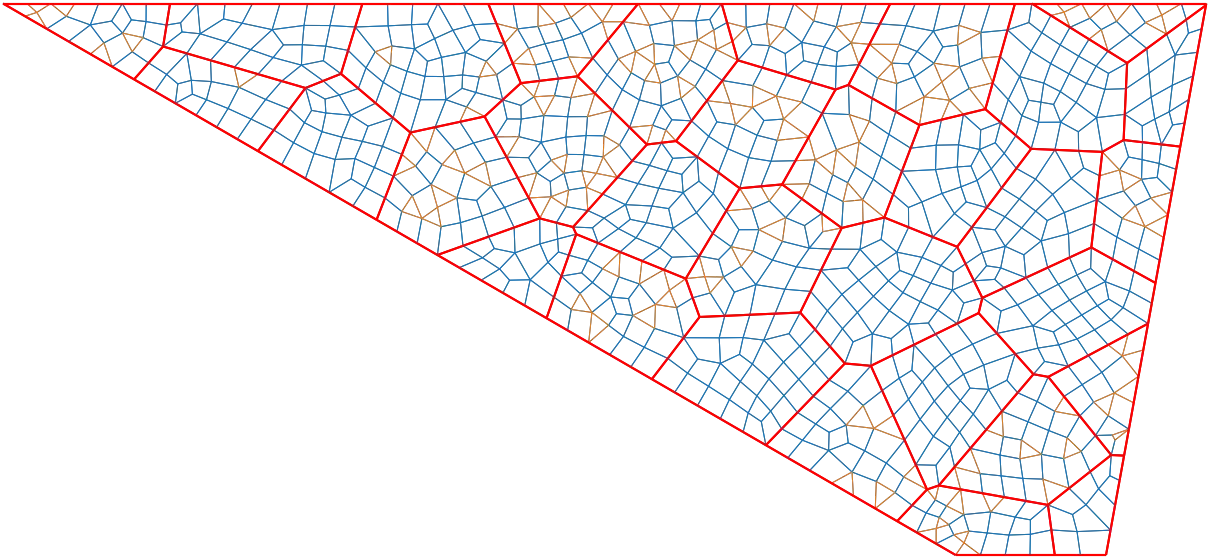
Grow internal member layouts directly from the load paths with topological derivatives and stress-aligned Voronoi seeding. Sizing then turns the winning layout into a dimensioned design.
Compose the modes into one strategy: interleave sizing, topology, and shape cycles in a single run, and end on a layout that is already sized and buildable.
Why teams switch
Where we're headed
We started with the hardest case we know: wing boxes and airframe structure, where buckling, frequency, and thermal constraints all bite at once. The same solver, sensitivities, and layout engine extend to other structural domains. If you're optimizing structure outside aerospace, tell us about your problem.
Request a demo and bring a model. The software makes a better case running on your problem than we could make in slides.